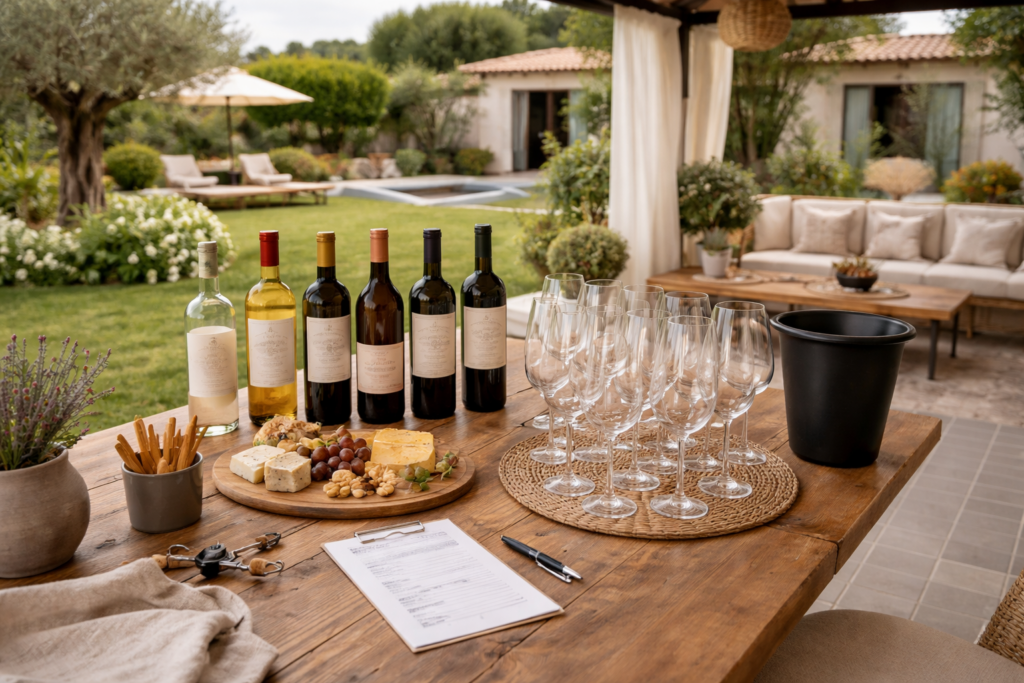
A Private Wine Tasting at Home: A More Personal Wine Experience
A private wine tasting at home offers something fundamentally different from a traditional wine tour or restaurant tasting. It creates a relaxed, intimate environment where wine becomes a shared experience rather than a formal event. Hosting a tasting at home allows you to slow down, engage in conversation, and explore wines in a comfortable setting surrounded by friends, family, or colleagues.
One of the most appealing aspects of a private wine tasting at home is the flexibility. The experience can be adapted to suit your interests, your level of knowledge, and the type of atmosphere you want to create. Some hosts prefer an educational and structured tasting, while others prefer a relaxed discovery focused on enjoyment and storytelling.
Whether the wines come from your personal cellar or are selected through guided sourcing, the goal remains the same: to create a meaningful wine experience that goes beyond simply drinking wine. A professional host or wine educator can bring context, stories, and insights that transform a simple tasting into a memorable and enriching experience.
Option 1: Using Your Own Cellar — Sharing Wines That Matter to You
Using your own cellar is one of the most personal and meaningful ways to organise a private wine tasting at home. Many wine lovers accumulate bottles over time — wines purchased during travels, special occasion bottles, or carefully selected favourites. A private tasting offers the perfect opportunity to share these wines with friends and family.
This approach turns the tasting into a storytelling experience. Each bottle often carries a memory: a trip to Margaret River, a small producer discovered in Europe, or a rare vintage purchased years ago. The host or wine educator can then guide the tasting, explaining why these wines are special — not only in terms of price, but also in terms of rarity, production methods, terroir, and winemaking philosophy.
Often, wines in private cellars represent a level of quality and individuality that is difficult to replicate in standard tastings. These wines may come from small producers, limited releases, or older vintages that are no longer available. The tasting becomes an opportunity to explore these wines in depth and understand what makes them exceptional.
This format is particularly appreciated by collectors or enthusiasts who want to share their passion while offering their guests a unique and curated experience.
Option 2: Guided Sourcing — Curating Wines for Your Guests
Another popular option is guided sourcing. In this format, the wine host or educator helps you select wines specifically for your tasting. This allows you to create a coherent theme while ensuring quality and diversity.
Guided sourcing is ideal when you want to explore a specific concept or introduce your guests to a particular style of wine. The host can suggest bottles based on your preferences, budget, and the level of experience of your guests. This approach ensures that the tasting flows naturally and builds progressively throughout the session.
It also removes the pressure of selecting wines yourself. With professional guidance, you can confidently present wines that complement each other and create an engaging tasting journey. This option is particularly useful for those who enjoy wine but may not feel confident selecting bottles for a structured tasting.
Option 3: Exploring Themes — A Journey Through Regions or Grape Varieties
One of the most engaging ways to structure a private wine tasting at home is around a theme. Themes create a narrative and allow guests to compare wines in a meaningful way. A guided tasting can explore grape varieties, regions, or even winemaking philosophies.
Popular themes include Pinot Noir around the world, Shiraz from different regions, or Cabernet Sauvignon comparisons. For example, guests might compare a Margaret River Cabernet Sauvignon with a Bordeaux, a Napa Valley wine, and a South Australian expression. This approach highlights how climate, soil, and winemaking influence the final wine.
Another option is to focus on a single region. A tasting might explore different producers within Margaret River, Swan Valley, or an international region. This format allows guests to understand the diversity within a region and appreciate subtle differences between producers.
Thematic tastings create conversation, curiosity, and discovery. They also encourage guests to engage actively, share impressions, and develop their wine knowledge naturally.
A Relaxed, Educational and Memorable Experience
A private wine tasting at home combines education, storytelling, and enjoyment in a relaxed environment. Whether using your own cellar or guided sourcing, the experience is tailored to your preferences and designed to create meaningful moments.
The role of the host or wine educator is to make the experience accessible and engaging. Rather than being overly technical, the tasting focuses on discovery, conversation, and sensory awareness. Guests learn to identify aromas, understand styles, and develop confidence in their own preferences.
Ultimately, a private wine tasting at home is about more than wine. It is about sharing stories, discovering new perspectives, and creating a memorable experience with people who matter. Whether showcasing treasured bottles or exploring new wines together, the result is a refined and personal wine experience — one that often becomes a highlight for both hosts and guests.